

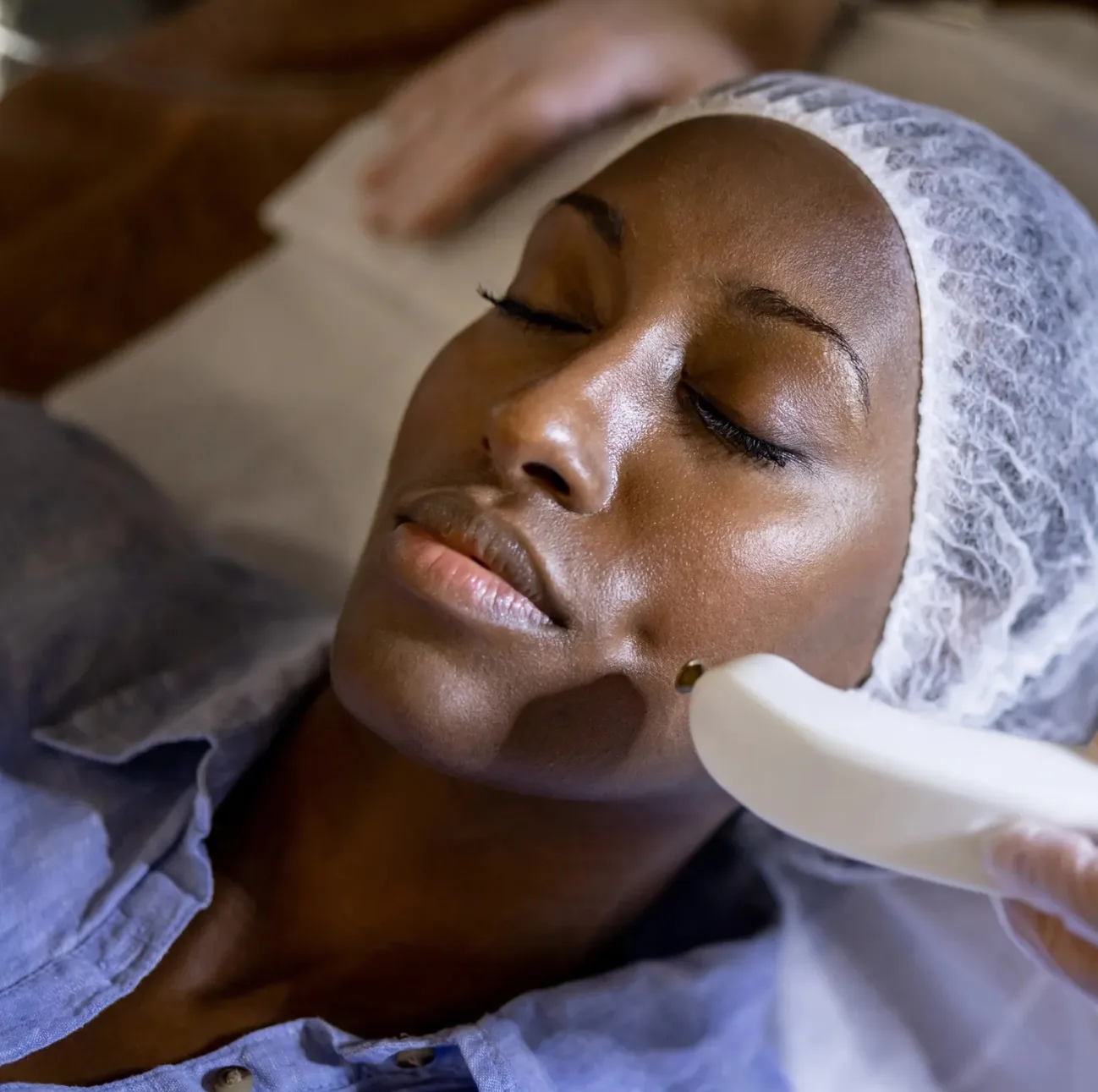
For a long time, people with darker skin were told that lasers were risky, or simply “not for us”. If you have ever been turned away or warned about burns, you are not alone. The good news? Laser hair removal on dark skin is now both safe and effective when the right technology is used.
Here is what changed, and how to make sure your treatment goes smoothly.
Is Laser Hair Removal on Dark Skin Safe?
Yes, laser hair removal on dark skin is safe when it is performed with the correct laser and settings by a trained practitioner.
Lasers work by targeting melanin, the pigment in the hair follicle. Older devices could not easily tell the difference between the melanin in the hair and the melanin in surrounding skin. On darker skin, that meant a higher risk of burns, blisters and dark or light patches.
Modern long-wavelength lasers solve much of this problem. The 1064 nm Nd:YAG laser passes deeper into the skin and is far less absorbed by the surface pigment. Research on darker skin types has found it did not cause post-inflammatory hyperpigmentation or hypopigmentation, which is exactly what melanin-rich skin needs.
Why the Type of Laser Matters So Much
Not every laser is suitable for every skin tone. Short-wavelength devices such as the alexandrite laser are excellent on lighter skin but carry more risk on deeper tones.
Before you book, ask your clinic:
- Which laser will you use on my skin type?
- Do you regularly treat clients with Fitzpatrick skin types IV to VI?
- Will you do a patch test first?
A patch test is your best friend. It shows how your skin reacts before a full session, and any responsible clinic will offer one.
How Many Sessions Will You Need?
Hair grows in cycles, and the laser only affects follicles in their active growth phase. That is why one session is never enough.
Most people need six to eight sessions spaced four to eight weeks apart, depending on the treatment area. Coarse, dark hair on lighter-than-hair skin usually responds best, but modern lasers work well across a wide range of tones.
You will notice hair growing back thinner, lighter and slower after each visit. Many clients also find that laser helps with stubborn ingrown hairs and razor bumps, which is a welcome bonus for anyone tired of shaving rashes.
How to Prepare for Your Treatment
A little preparation goes a long way:
- Shave the area a day before, but do not wax, pluck or thread for several weeks beforehand
- Avoid tanning and use sunscreen daily, especially on your face
- Pause strong exfoliants or retinoids on the area if your practitioner advises
- Tell your clinic about any medication, as some increase light sensitivity
Afterwards, mild redness or a warm, prickly feeling is normal and usually settles within a day.
What It Feels Like
Most people describe the sensation as a quick snap, like a rubber band flicking against the skin. Modern devices often include cooling to keep you comfortable, and sessions on small areas can take just a few minutes.
Final Thoughts
Laser hair removal on dark skin is no longer a gamble. With the right laser, a patch test and an experienced team, you can enjoy smoother skin with fewer sessions and lasting results.
Ready to say goodbye to razor bumps? Explore our laser treatments or book a consultation today.
This article is for general information and is not a substitute for a medical consultation.